

The Hottest Hit On The Planet…
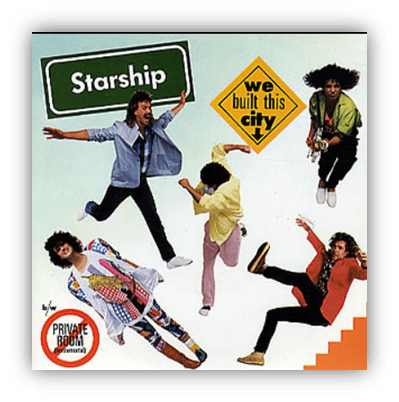
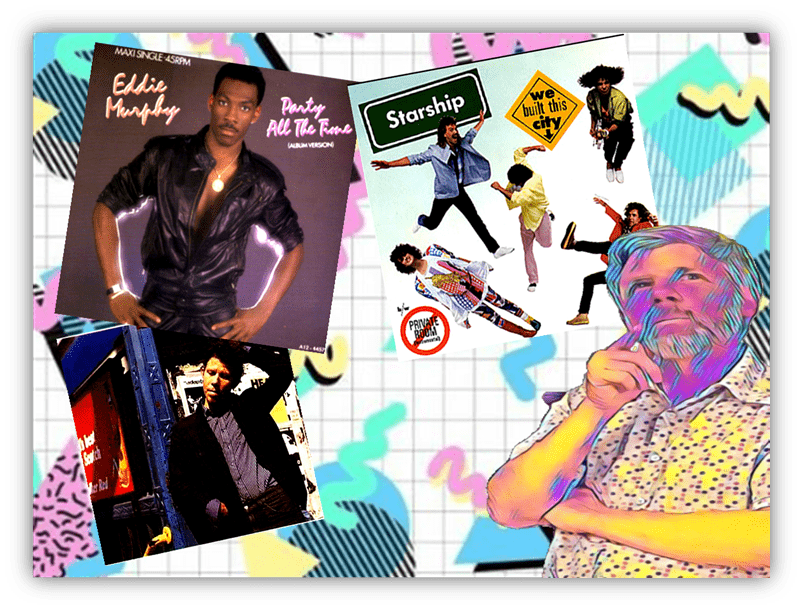
It’s “We Built This City”
by Starship
As I’ve probably mentioned, here and there, from time to time, I am writing a 20 volume History Of Pop Music –
(That’s the plan anyway, if I don’t die or go senile before I get to the end…)
…Sections of which, dear reader, you are now reading for free! (Want to read more for free? I’ve posted the first few chapters of the first volume – “From Thomas Edison To Duke Ellington” – here!
I mention this because “We Built This City” will be the subject of the opening chapter of Volume 8:
“From Bananarama to Nirvana:”
Establishing a grand narrative in which the charts and the radio is taken over by Baby Boomer balladeers, forcing hip-hop, heavy metal, techno, house and punk underground, waiting in the shadows for their opportunity to overthrow the oppressive regime of Phil Collins.
They were dark days.
One of my favourite existing pop music histories, The Faber Book Of Pop literally referred to this period as “The Darkest Well.”
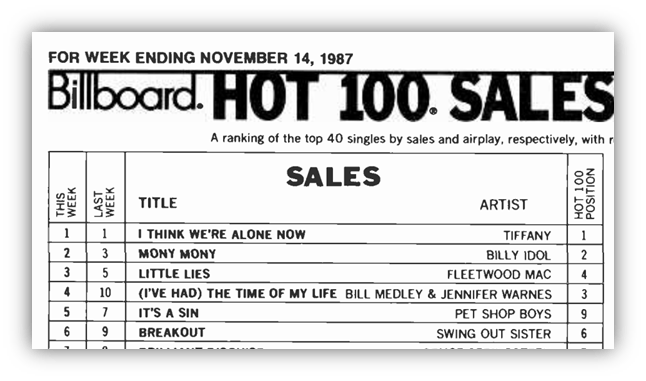
It was a period in which the biggest pop stars mostly seemed to be Baby Boomer icons on the comeback trail – Steve Winwood, and Tina Turner, and Cher – or bands like Dire Straits, who clearly wished they were Baby Boomer icons. Or George Michael pretending to be Elvis.
It was an era in which, if the hits weren’t being recorded by 60s relics themselves, then they were pop-star-age-appropriate pop stars recording covers of 60s classics:
- “Venus”
- “You Keep Me Hangin’ On”
- “The Loco-Motion”
- And two songs by Tommy James at Number One in a row!
Then there was Mick Jagger and David Bowie’s “Dancing In The Street”, a 60s icon – and a 70s icon, although one who did have one hit in the 60s – covering a 60s song; a huge hit even though it was the worst thing ever… worse even than “We Built This City.”
All of which created the necessary circumstances for “We Didn’t Start The Fire” – a song that was little more than a list of historical events from the Boomers’ youth – to go Number One! The Boomers had well and truly taken over the world.
In order to take over the world, Boomers needed to take over corporate America.
And in order to do that they needed to abandon the principles of their free-loving hippie-youth and embrace yuppie-dom. They needed to play cor-por-ation games.
More than virtually any other 60s icons, Starship (formerly Jefferson Starship formerly Jefferson Airplane), looked and sounded like hippies who had abandoned their principles and embraced yuppie-dom. They had, after all, changed, their cor-por-ation name. At first from Jefferson Airplane to Jefferson Starship, and then to just Starship.
A lot of people had a problem with this hippie-yuppie cultural shift. Those people also had a problem with “We Built This City.”

These people drove the campaign to have “We Built This City” recognized as The Worst Song Of All Time.
That feels a little unfair.
It wasn’t as though Starship (formerly Jefferson Starship formerly Jefferson Airplane) were the only formerly-counter-cultural icons going so aggressively pop towards the end of 1985, or even the most surprising. Jefferson Airplane may have been regarded as psychedelic acid rock trailblazers, but the trail that they had blazed had been at the very poppermost extreme of that mind-melting frontier: going fully pop wasn’t exactly that great a leap.
Meanwhile, over in the UK, Feargal Sharkey, previously the lead singer of The Undertones, whose “Teenage Kicks” is one of the all-time punk classics, and who had, only a few years earlier, made fun of The Human League on “My Perfect Cousin”, went to Number One with “A Good Heart”, thereby out-Howard-Jonesing even Howard Jones. Sure, that must’ve been an even greater shock.
For how do you go from this…
To this…
…in about a third of the time that Starship (formerly Jefferson Starship formerly Jefferson Airplane) had made their transition?
Starship recorded “We Built This City” because Grace Slick wanted to have hits again.
Apparently sick of the same rock’n’roll lifestyle that “We Built This City” forces you to recognize as the fountain of our shared prosperity, Grace wanted to “tour, make a lot of money, and then retire.”
- Good plan.
- Cynical.
- 100% Yuppie.
Best not to get in the plan’s way then by trying to write the songs herself. Best to get some outside help. Which is how Grace Slick ended up singing a song that she didn’t believe in, thereby allowing her to spend her retirement engaged in her favourite hobby: talking shit about it. Shit like this:
“We built this city on rock and roll?
There isn’t any city built on rock and roll.”

“If you’re talking about L.A., that’s built on oranges and oil and the movie industry. San Francisco, that’s built on gold and trade. New York that’s been around way longer than rock and roll”
I have had similar thoughts about the historical accuracy of “We Built This City” myself.
Can you tell that “We Built This City” is a song performed by a band who don’t believe in anything anymore? Who just wanted one more hit before they got the hell out? Yes, you certainly can.
But somebody believed in “We Built This City,” and that somebody was Bernie Taupin.
“We Built This City” was a protest song Bernie Taupin wrote because he was sad all the live venues in Los Angeles were closing down. Which means that even though it was written by two Brits – and produced by an Austrian – “We Built This City” is basically an American take on The Specials’ “Ghost Town.” And here we see the fundamental difference between the temperaments of the two countries.
I don’t know if Bernie has ever said which particular venues he was so sad about, but it probably wasn’t the glam metal clubs on Sunset Strip. That scene was booming! Poison arrived about this time, and they couldn’t believe their eyes:
“We’re driving past the Rainbow, Gazzarri’s, the Roxy, the Whisky, and there’s gotta be, like, 100,000 people walking around. And they all look like they’re in a band.“
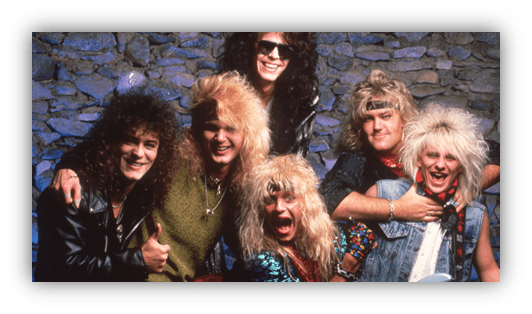
So Bernie needn’t have worried. He needn’t have written “We Built This City.” We could have been spared all of this.
The other Brit who wrote “We Built This City” was Martin Page, who was most famous at this point for his attempt to write the UK’s Eurovision entry for 1982. It didn’t get in though, despite being one of the most Eurovision things I’ve ever heard.
Martin had also played on “Ghostbusters.” So, when Bernie needed some music for his musings about the impending death of the Los Angeles music scene, who was he gonna call?
According to Martin:
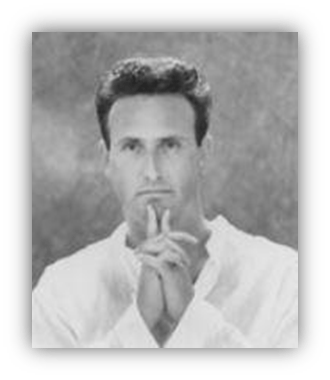
“If you look at the lyrics of “We Built This City” carefully, you can see that Bernie was shaping the words towards an almost desolate ‘Blade Runner’ apocalyptic drama.”
“Where live music was being driven from the clubs, where corporations were eating up the soul of live Rock ‘n’ Roll – envisioning a place where youth was no longer valid, where the heritage, the spirit of Rock ‘n’ Roll was being crushed, erased and forgotten.”
Despite this, “We Built This City” sounds less like a protest song about the need to protect live music venues – which would have been totally “hippie” – and more like an advertisement for corporate radio – and so totally “yuppie”.
Starship literally cry out “LISTEN TO THE RADIO!!!”
And they have a section that can best be described as a radio DJ patter solo.

I call it a solo, because it’s where a guitar solo would otherwise be, and would’ve been, except that Martin hated guitar solos. Although the DJ says some of the most stereotypical DJ stuff you can possibly imagine, he says it with enthusiasm!!!
“I’m looking out over that Golden Gate bridge
On another gorgeous sunny Saturday
And I’m seeing that bumper to bumper traffic”
I don’t know how, but he somehow makes gridlock sound exciting.
“It’s your favorite radio station
In your favorite radio city
The city by the bay, the city that rocks
The city that never sleeps”
As has often been noted, “The City By The Bay” – San Francisco – “The City That Rocks” – Cleveland – and “The City That Never Sleeps” – New York – are three separate cities. Starship were covering their bases, maximizing their market potential. Just so nobody would feel left out the label left that section blank when they sent it to radio stations so local DJs could make their own local versions.
Many radio stations did so.
The DJ patter section isn’t on the original demo of “We Built This City”, which instead has a recording of a police report of a riot: “I literally put the microphone up next to a transistor radio and caught (on first try!) a police report of an actual riot going on in Los Angeles…”
Both Martin and Bernie insist that the demo version sounds “dark.” I guess anything would sound “dark” compared to the Starship version – like the difference between a police report of a riot and some over-enthusiastic DJ patter – but mostly it just sounds embarrassing. Martin appears to be trying to do an impersonation of an impersonation of an impersonation of David Bowie.
It’s not good.
I feel like I’m making fun of “We Built This City.” That’s probably because I am.
It’s fun to make fun of “We Built This City.” It may as well have been intentionally designed to be a song to make fun of, and I don’t think I’m saying anything worse than anything that Grace had said.
But the thing is, I actually quite like “We Built This City.”
Admittedly, that’s largely because I like hot messes. And sing-a-longs. And “We Built This City” is unarguably both those things. “We Built This City” is also a uniquely ugly sounding song. The “bow bow” synth slap bass sounds particularly unpleasant, as does Grace’s impression of a robot… but for the complete hot-mess experience, you need to see the video, in which they try so, so hard to look so eighties it hurts:
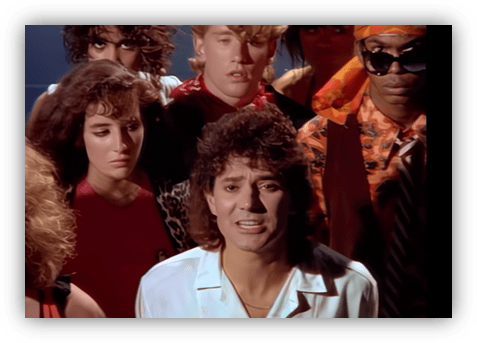
Surrounding themselves with extras chosen for their abilities to look exactly like extras in an 80s music video.
Central casting were busy that day.

The single artwork isn’t much better…

Grace seems to think she’s Punky Brewster.
According to the “We Built This City” video, not only was Los Angeles built on rock’n’roll (as opposed to oranges and oil and the movie industry), but San Francisco, Las Vegas, New York, Chicago, and… most disturbingly… Washington… disturbing because it features a special guest star: the statue of Abraham Lincoln crying out “WE BUILT THIS CITY ON ROCK AND ROLL!!!”
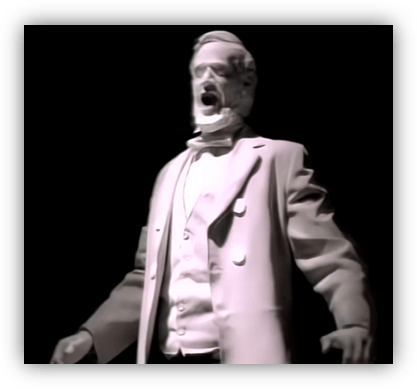
(Which I guess is catchier than “WE BUILT THIS CITY ON SLAVE LA-BOUR!!!”, although obviously that would have been a bit off-brand for Abe.)
Whilst in Las Vegas, we have a giant dice mowing the extras down, because…
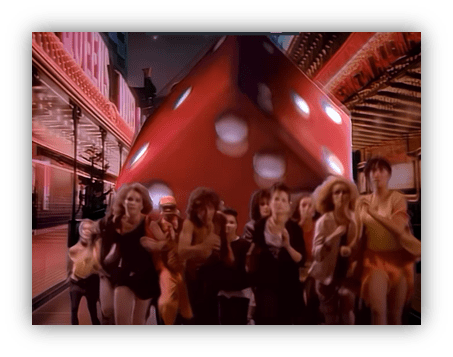
…who the hell knows?
Like I say, I like “We Built This City. Even if Starship’s (formerly Jefferson Starship’s, formerly Jefferson Airplane’s) status as the standard bearers of the Boomer transition from hippie to yuppie makes you mad, the sheer shamelessness with which they double down on their psychographic shift, their willingness to get “kneedeep in the hoopla” as it were, fills me with something close to awe.
Close to, but not quite… it is objectively rubbish.
“We Built This City” is a 6.
Speaking of another hit record that was objectively rubbish…
Meanwhile, in Celebrity Vanity Project Land…

It’s “Party All The Time”
by Eddie Murphy
Eddie Murphy wanted to be a singer.
He’d spoken about this before, and at some length. He’d explained his rationale for wanting to be a singer. Because “being a comic though, ain’t like being no singer… because singers get all the p*ssy.”
Eddie Murphy in the mid-80s was already one of the famous people in the world. He’d starred in Trading Places, Beverly Hills Cop(so he was already all over MTV as the theme song soared up the charts) he’d released two comedy albums – Eddie Murphy and Comedian – and they charted! The latter went double-platinum and got to No.10 on the R&B charts!
If any stand-up comedian had a chance at a proper hit single, it was Eddie. He was already impersonating pop stars:
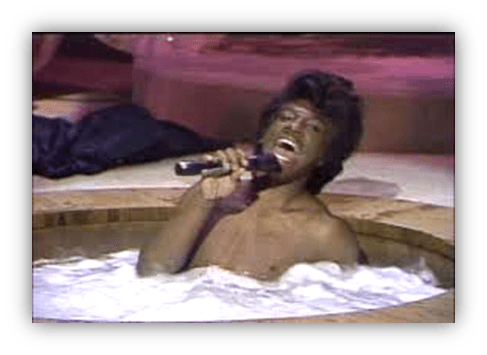
James Brown, Stevie Wonder, Michael Jackson.
And he was already hanging out with most of them in his spare time: that’s how he knew they got all the…
Eddie had also had a band in high school, in which he and his friend Mitchell Keiser would perform Beatles impersonations.
They called the band the Eddie Murphy Mitchell Keiser Band. Terrible band name, but I guess that’s the joke. Eddie initially started thinking seriously about making a pop album when he was at the disco and heard DJs playing his comedy records with a disco beat underneath. Eddie started thinking maybe he could do shows like that: part comedy, part singing.
Then Eddie started thinking: maybe he could make a proper pop music album.
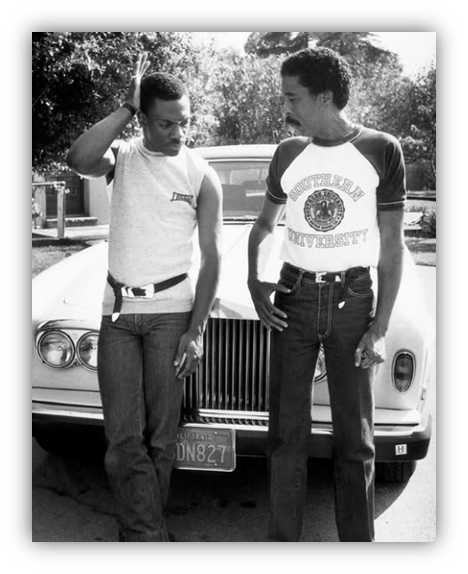
Eddie started telling people about his plans. One of the people he told was Richard Pryor.
Richard bet him $100,000 that he couldn’t make an album with no jokes. Eddie took the bet seriously. Eddie took the album seriously. You can tell Eddie took the album seriously because Eddie is leaning on a grand piano.
Presumedly it’s the grand piano that Eddie bought to put in his new Hollywood mansion.

…Well, no, but you did stop your show to make a movie. and that turned out pretty well…
Eddie liked to tinkle on that piano. He liked to tinkle on it so much that he started to buy recording equipment to go with it. Soon he’d collected enough that you could credibly describe it as a studio. Eddie’s serious music album was getting serious. Eddie started calling up his famous musician friends.
He called up Stevie Wonder. He called up Prince.
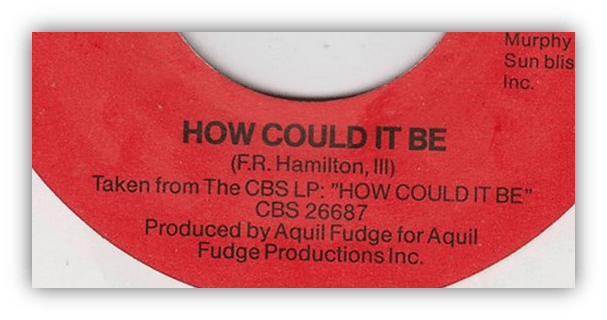
Stevie sent him a few songs and introduced him to Aquil Fudge who produced most of the album.
Nobody believed that Aquil Fudge was real – no name has ever sounded so made-up – but it turned out it was Stevie Wonder’s cousin.
It also turned out that Aquil didn’t know what he was doing, completely fudged it up, and so about his only other credit is for a B-side to a single by Michael Winslow, the Police Academy voices dude.
Prince just sent him a groove for a song called “Chocolate” but it didn’t get included. Things got a little bit awkward when Eddie and Prince and Eddie’s brother Charles played a game of basketball at Prince’s Hollywood mansion…

(Prince won, then made them blueberry pancakes),
…And Eddie put a copy of the album on the boombox. At the end of the game, Prince had had enough, walked over the boombox, took the cassette out and threw it away, saying:
“Let me ask you a question:“
“Do you see me stop my show to do comedy?”
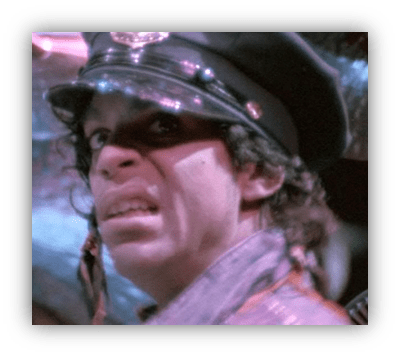
Eddie still thanked Prince in the liner notes, “because it’s cool to have your names on my album.” He also thanked Michael Jackson for the same reason, even though he did absolutely nothing.
Working his way down his list of 80s pop superstars, Eddie finally found himself at Rick James’ house, at about the same time as Rick was having a hit with the Mary Jane Girls with “In My House.” For although Rick was not really having hits himself anymore, he had transformed himself into a hit producer, seemingly in order to put together a harem of proteges, a la Prince.
So Eddie goes up to Rick James’ house, in Buffalo, upstate New York… and gets snowed in for two weeks. And when I say snow, I mean actual snow, not… y’know. It was a legendary blizzard, the “Six Pack Blizzard” of January 1985.
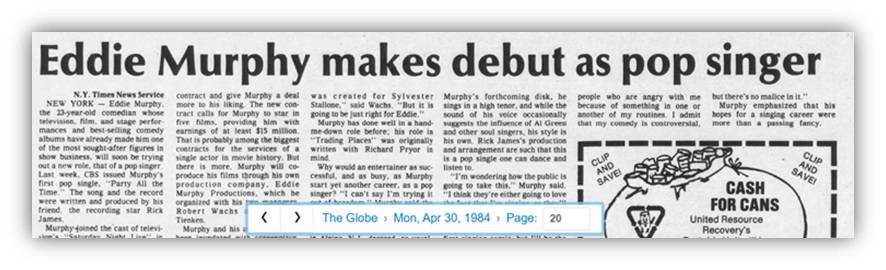
Or was it? I have seen newspaper articles – multiple articles, or at least the same article, in multiple newspapers, by Robert Palmer, the music critic, not the “Addicted To Love” guy – discussing “Party All The Time‘”‘s release in April 1984!
Working his way down his list of 80s pop superstars, Eddie finally found himself at Rick James’ house, at about the same time as Rick was having a hit with the Mary Jane Girls with “In My House.” For although Rick was not really having hits himself anymore, he had transformed himself into a hit producer, seemingly in order to put together a harem of proteges, a la Prince.
So Eddie goes up to Rick James’ house, in Buffalo, upstate New York… and gets snowed in for two weeks. And when I say snow, I mean actual snow, not… y’know. It was a legendary blizzard, the “Six Pack Blizzard” of January 1985.
Or was it? I have seen newspaper articles – multiple articles, or at least the same article, in multiple newspapers, by Robert Palmer, the music critic, not the “Addicted To Love” guy – discussing “Party All The Time”s release in April 1984!
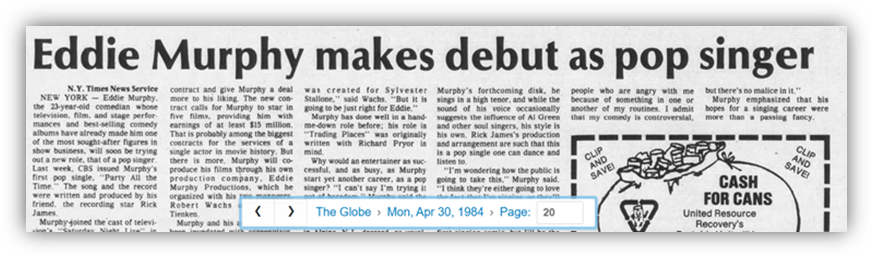
So it must’ve been a different blizzard the year before (Buffalo had a number of blizzards in early 1984, including one in late February, just after Eddie’s last SNL show!).
Eddie has also claimed to have been in Stevie Wonder’s studio – called, naturally, Wonderland – on the night that “We Are The World” was being recorded just down the road. Which, wouldn’t you know it, happens to have been at pretty much the same time as the “Six Pack Blizzard”!!! …
Stevie called Eddie up and said “come on over, we’re doing this thing” and Eddie, instead of saying, quite understandably, “I’m stuck in a blizzard at Rick James’ place on the other side of the country”, simply said “sorry, I’m working on a song just down the road”… or maybe it was on the other side of town…
* I’ve spent way too much time going down this rabbit hole of exactly when “Party All The Time” was recorded – I’m probably the only person in the world who cares, but it’s seriously doing my head in – I’m not going to now also try and figure out the route Eddie would have had to have taken to get from Wonderland to the “We Are The World” session.
But anyway, back to the song.
“Party All The Time” is not the insatiable party song that you might have thought. It is not a song about how Eddie wants to party all the time, party all the time, party all the tiiiiime, or even a celebration of his girl, who wants to party all the time, party all the time, party all the tiiiiime. Having a girl who wants to party all the time, party all the time, party all the tiiiiime, is a problem for Eddie!
- Eddie buys his girl champagne and roses.
- He puts diamonds on her fingers.
- But still, she hangs out all night.
- She gives her number to every man she sees.
- She never comes home at night, because she’s out romancing!!!
What is Eddie to do?
As somebody not famous for being a singer, much of the focus of any critique of “Party All The Time” is understandably on the question “can Eddie sing?”
Eddie’s voice is buried deep and processed more than any other vocal track in the history of popular music – how many Commodore 64s had to be hooked up to each other to make “Party All The Time” sound the way it does – but it seems not. Eddie sounded quite good when he did impressions, maybe he should have done one of those. Or maybe that would have broken the “no jokes” clause.

The video for “Party All The Time” is one of those half-assed let’s-film-everybody-in-the-studio videos that the 80s possessed in such abundance when they couldn’t think of anything better.
Was the viewer actually supposed to believe these were the genuine recording sessions, and that they were being granted the privilege of seeing magic being made?
Say what you want about “We Are The World”, at least that footage was real. The video for “Party All The Time” on the other hand is obviously fake.
Eddie did not walk in off a street covered in snow. Eddie is wearing a short-sleeved shirt, with half the buttons undone. Eddie is not dressed for Buffalo-winter weather.
Eddie just walks into the studio with MTV head co-founder Les Garland… this was considered a big deal at the time because Les and Rick James were in the middle of a feud; a feud that started when MTV refused to play “Superfreak.”
Rick believed that was because they were racist. MTV said that it was because the video was pretty kinky.
Another MTV co-founder suggested that they’d be happy to play Rick James… if he made a rock record.
“That’s what’s happening… we’ve been sat in the back of the bus, television style… a lot of white kids are putting on MTV and going where’s Stevie Wonder? Where’s Marvin Gaye? Where’s Rick James? Where are all these acts… next to my Billy Joel record there’s Rick James, next to my AC/DC record there’s Aretha Franklin… where are these people, I mean, don’t we exist?”
So Rick James and MTV were at war: only Eddie Murphy could bring the parties together. Amongst much else, the “Party All The Time” video is the Great Rick James-MTV Peace Conference. Looking at the body language relations still seem a little frosty – about the only thing in the video that is:

– But here’s a happier photo from about the same time.
And what did Eddie have to do to make this happen? He had to host the 1985 MTV Awards.
Those were some awkward negotiations. First Eddie said no, because he was an actor. Then he realized that he’d made a music album, so, as he said on the night “I’m here kissing MTVs butt.” Then he was like, “you probably won’t play my video anyway, you didn’t play Rick’s”. So MTV promised, you host the show, we’ll play your video.
So Eddie hosted the show, and MTV played the video.

In which Eddie strolls into the booth, is such a newbie that Rick has to tell him to put on his headphones, and yet he crushes it!
He doesn’t actually crush it of course. I’m just describing the narrative of the video… Eddie doesn’t even come across as a viable pop star… he simply comes across as an incredibly famous person indulging in a vanity project.
“Party All The Time” does sound good.
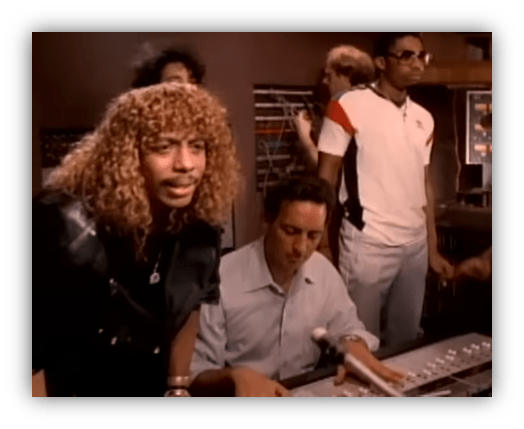
Rick knows it sounds good.
Watch him fist-bump the drum machine rolls! And clap along with the claps! The whole thing sounds sparkling, but it’s sparkling rubbish. People say you can’t polish a turd, but this thing is shining! It makes you want to party all the time, party all the time, party all the tiiiimmme!!!
“Party All The Time” is a 6.
From one artist with questionable vocal talent to another: can Tom Waits actually sing?
Meanwhile, In “Would You Like A Cough Drop?” Land…
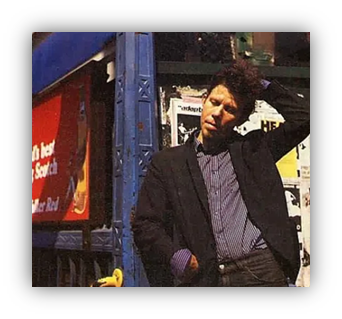
It’s “Downtown Train”
by Tom Waits
On the spectrum of singers from smooth-as-silk to, “I’d see the doctor if I were you”, Tom Waits is so much the latter that it’s a wonder he hasn’t been permanently hospitalized.
It’s as though he heard Rod Stewart and Joe Cocker and Louis Armstrong and said, “hold my beer.” Or, more likely, “hold my bourbon.”
But Tom hadn’t always sounded like that.
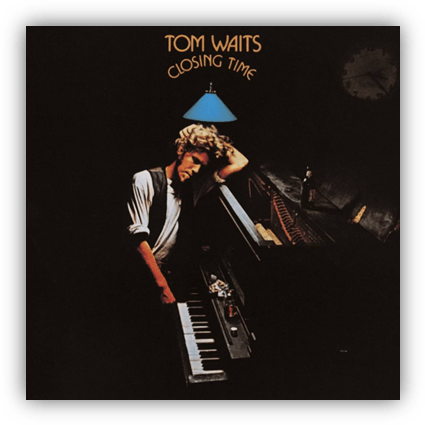
(Pretty much all his early album titles were set in a bar…)
…Tom sounded like a lonely drunk half asleep at the piano, but at least his throat was intact. He hadn’t quite committed fully to the Tom Waits character. Once he did, the critics couldn’t get enough.
Neither could talk show hosts.
Who wouldn’t love this leprechaun shuffling into the studio with a cigarette hanging out of his mouth garbling some beatnik jive?
Watch pretty much any Tom Waits interview and he comes across as some homeless guy who’s just wandered in off the street, the host seemingly deciding “what the hell, let’s interview him,” and before they knew it, they were being asked for spare change.
People just seemed to love watching Tom talk. Judging by his complete and utter lack of chart success, people seemed much less enthused about hearing Tom sing. Which was odd, because Tom talking and Tom singing sounded pretty much the same.
People also seemed to prefer Tom Waits songs when they were sung by people other than Tom Waits. People with far smoother tones.
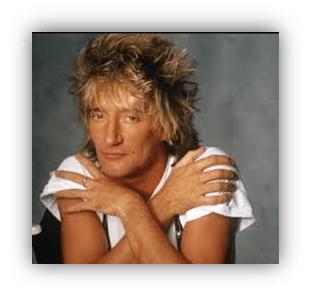
People like Rod Stewart.
Compared to virtually anyone else, Rod Stewart is considered a craggy, raspy, crotchety singer. For many people he’s pretty much the definition of craggy, raspy, crotchety singer.
It says a lot about how deep Tom Waits disappeared into the Tom Waits persona that Rod’s big-soft-rock radio-hit- version of the same song sounds so sparkling clean, so shining like a new dime, that it’s basically sacrilege.
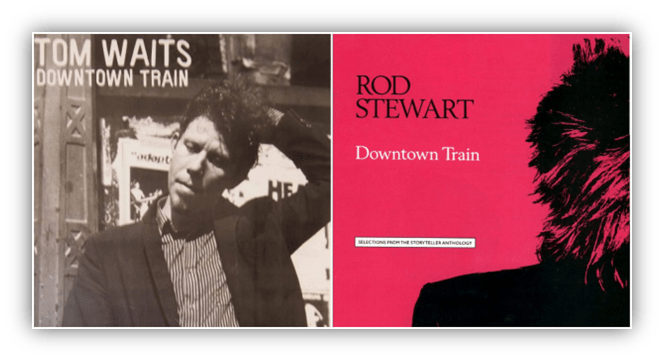
No matter how gritty Rod tries to look by singing next to a trashcan bonfire, he simply cannot convincingly portray the homeless hobo that any Tom Waits’ song requires.
(Which is odd, since for a while in his youth, that’s pretty much how Rod Stewart lived).
But that’s what was required to turn a Tom Waits song into something that could bump Michael Bolton off Number One on the Adult Contemporary Charts in 1990.
Tom Waits had grown up in a respectable middle-class family but had decided that life would be a whole lot more interesting if he turned himself into a beatnik hobo who lived in his car, and sang songs with titles such as “A Christmas Card From A Hooker In Minneapolis.”
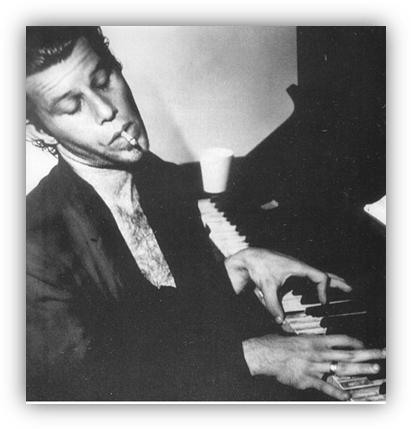
Tom’s first decade or so of albums were basically just his crotchety voice and a piano (that may or may not have been drinking)… the kind of stuff that makes people assume that Rowlf The Dog was based on him.
He wasn’t… Rowlf The Dog preceded Tom’s career by about a decade, so it may have been the other way around… or perhaps the lonely bar piano player is simply a classic archetype.
But then things got weird.
It all started when Tom fell in love, and married, a script supervisor named Kathleen – he’d already dated Bette Midler and Rickie Lee Jones – who became his manager and muse and suggested he stop using proper instruments and start playing stuff he picked up off the streets of New York where they soon started to live.
New York made much more sense as a home for Tom Waits than Los Angeles had.
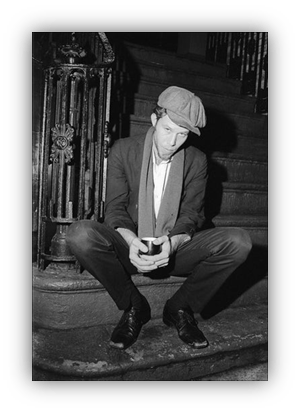
He doesn’t come across as the kind of person who likes the sunshine a lot.
Tom’s mid-80s output – Swordfishtrombones, Rain Dogs and Frank’s Wild Years – are full of noises that sound as though they were created by banging on stuff that Tom had picked up off the streets, although the credits suggest they feature nothing more weird than a musical saw; which is still plenty weird.
Swordfishtrombones does not feature a swordfishtrombone, largely because such an instrument doesn’t exist.
But you can be sure that Tom would try to play it if it did.
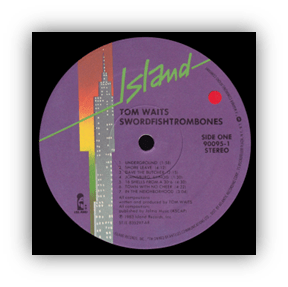
When Tom claimed the sounds on Rain Dogs were produced by going to “the bathroom and hit(ting) the door with a piece of two-by-four very hard” it was probably a lie – pretty much everything that Tom Waits says is – but it was a believable one.
Those three albums are usually referred to as “The Frank Trilogy:”
A character introduced in Frank’s Wild Years, which, just to be confusing, was a track, not on Frank’s Wild Years, but on Swordfishtrombones. The song starts off with
“Well, Frank settled down out in the Valley and he hung his wild years on a nail that he drove through his wife’s forehead…” and goes from there.
Don’t be confused though. “The Frank Trilogy” is not about Frank, who by the end of Frank’s Wild Years – the song, not the album – has burnt down his house because he hates his wife’s chihuahua, but about a whole bunch of seedy characters, and a love letter to New York, a city where – to quote an interview with Spin about the same time:
“You see a leg come out of a cab with a $150 stocking and a $700 shoe and step in a pool of blood, piss, and beer left by a guy who died a half hour before and is now lying cold somewhere on a slab.”
Everything in the world of Tom Waits seems to come back to rain and piss. As he explained the meaning of the title of the Rain Dogs album:
“You know dogs in the rain lose their way back home.“ “
“They even seem to look up at you and ask if you can help them get back home. ‘Cause after it rains every place they peed on has been washed out.”
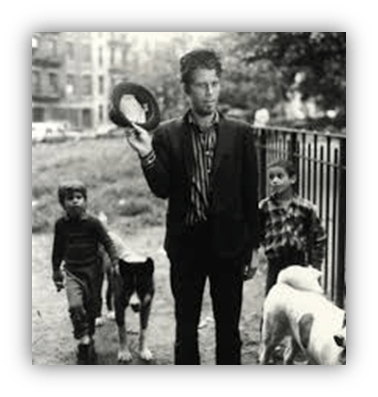
Tom Waits has an interesting way of looking at the world.
“Downtown Train” is what passes as a love song through the mind of Tom Waits.
Which means it’s probably sung from the point of view of an obsessive stalker. By anyone else – Rod Stewart for example, “Downtown Train” may seem touching, a crotchety old guy with a crush on a girl that he sees on his evening commute. But when it’s Tom Waits singing…
“I know your window and I know it’s late
I know your stairs and your doorway
I walk down your street and past your gate
I stand by the light at the four-way”
… it’s probably time to call the police.
“Downtown Train” is an 8.