



Photo credit: Rudy Gutierrez
All is calm, all is deeply resonant…
William John “Bill” Bell was born in Creston, Iowa, on Christmas Day in 1902.
He began playing the tuba as a boy and quickly developed into an exceptional musician. At age 18, he was the principal tubist in John Philip Sousa’s famous band. That’s how good a musician he was.
Over the course of his life, Bell built a remarkable career in major orchestras.

He was principal tuba player with the Cincinnati Symphony Orchestra, was selected by conductor Arturo Toscanini for the NBC Symphony Orchestra, and joined the New York Philharmonic in the 1940s.
In addition to performing, Bell was a dedicated teacher. He became a professor at prestigious music departments like the Manhattan School of Music and Indiana University. He influenced generations of tuba players and helped shape modern tuba education. His students loved him.
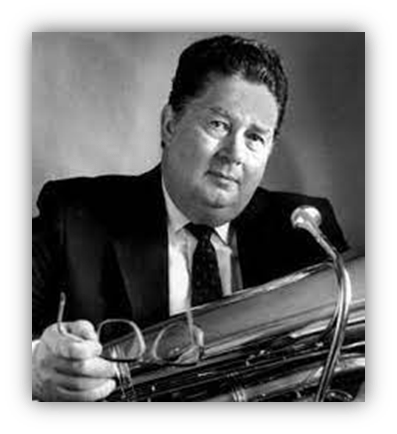
After his death in 1971, one of his students, a leading American tubist named Harvey G. Phillips, decided to honor his former teacher with a public, festive tribute:
One that would celebrate the tuba family — tuba, euphonium, sousaphone and the like — and bring attention to the artistry of low-brass players.
Knowing that Bell was born on December 25th, he came up with the idea that became TubaChristmas.
It was supposed to be a single concert to honor Bell’s life and music, and make Christmas carols boom. Phillips was a natural organizer and a champion of low brass. TubaChristmas fit his life’s work — to put the tuba family in the spotlight rather than in the basement supporting higher pitched instruments.
The concert was held on December 22, 1974 at the ice rink in Rockefeller Center, New York City.

Conducted by Paul Lavalle, more than 300 tuba-family players did a set of traditional Christmas songs arranged specifically for the occasion by composer Alec Wilder.
Each melody is played twice, first by the brass alone. Then they play it again with the audience singing along.
I’ll have to be honest: at the ones I’ve been to in previous years, not many people sing. We Americans don’t like singing in public for some reason. And if I’m really, really honest, I’d rather just listen to the tubas. They’re magnificent.
People enjoyed it so much that it became an annual event, and the idea spread quickly.
Tubists across the country began copying the model: book a public place, pick a set of carols, advertise in the schools and music shops, and invite players of all ages and skill levels. That lineup — a free concert in a welcoming public space — became the template for the event held every December since then.
It’s part concert, part street art, and fully communal.
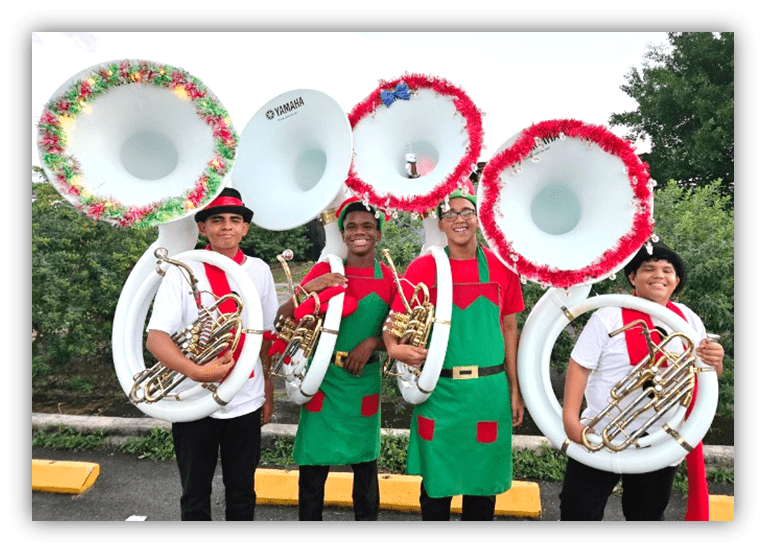
The idea is not just to promote the tuba, but to bring the people together.
What started as a one-off tribute became an annual ritual, and then a global phenomenon.
There are well over 200 events worldwide each season, from small town squares to big-city plazas.
The tuba family includes:
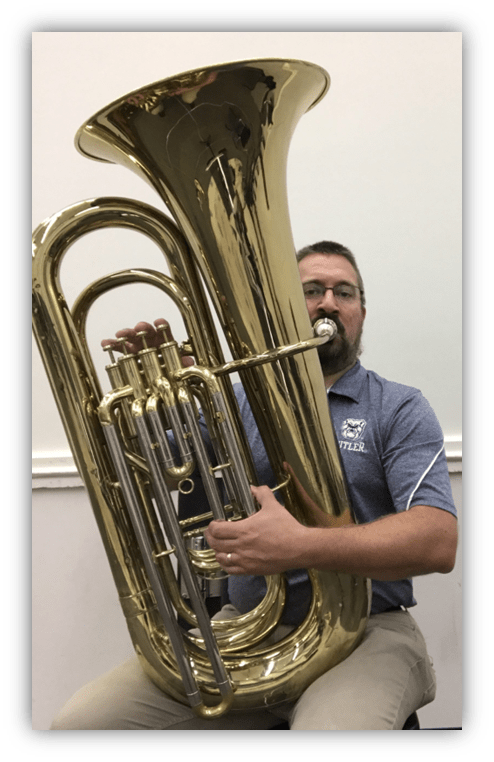
- Tubas
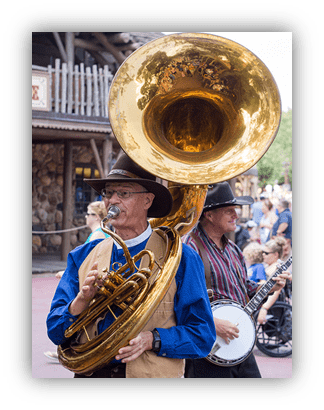
- Sousaphones
- Helicons
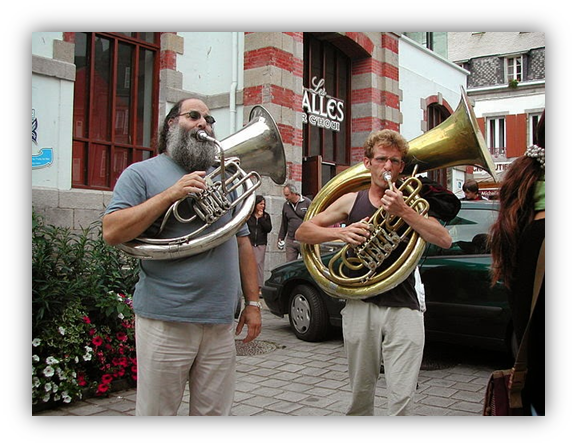
- Euphoniums
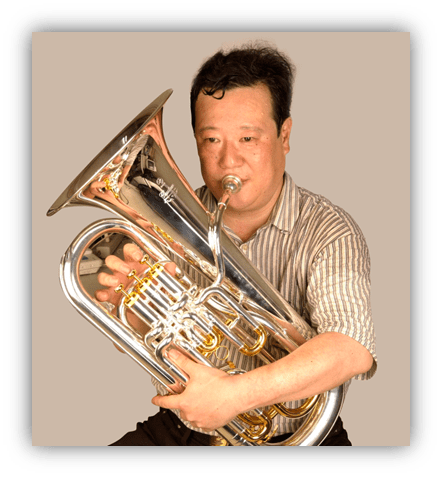
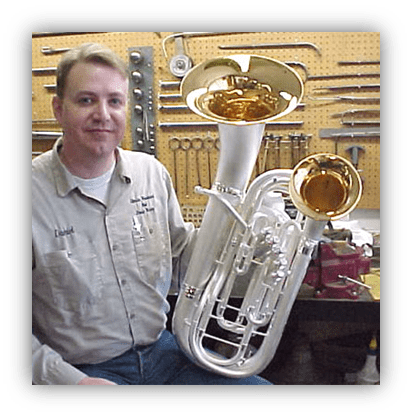
- Double-bell Euphoniums
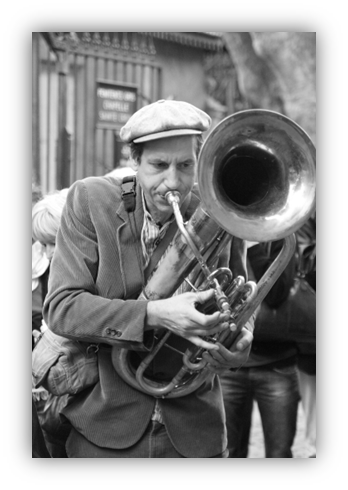
- and Baritone horns.
The baritone horn plays the same range of notes as the trombone, but uses valves instead of a slide. They sound remarkably similar, though the baritone’s valves are more precise. The trombone, on the other hand, can glissando (e.g., slide) from one note to the next.
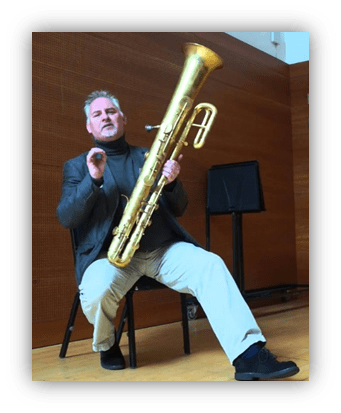
In Nashville this year, there was even an ophicleide:
Harvey Phillips used TubaChristmas and other projects (like Octubafest) to raise the tuba’s profile and to commission new works.
He continued to be closely linked with TubaChristmas until his passing in 2010, but The Harvey Phillips Foundation lives on and helps to coordinate and support local organizers so the tradition keeps running smoothly.
I heard about TubaChristmas from my boss at my first job in Nashville that I mentioned two weeks ago, and I’ve gone almost every year since. It’s held at the Nashville First Baptist Church on the corner of Broadway and 7th Avenue.
It’s a couple blocks from Lower Broadway, where all the honky tonks are. The Barbershop Harmony Society is just across the street.
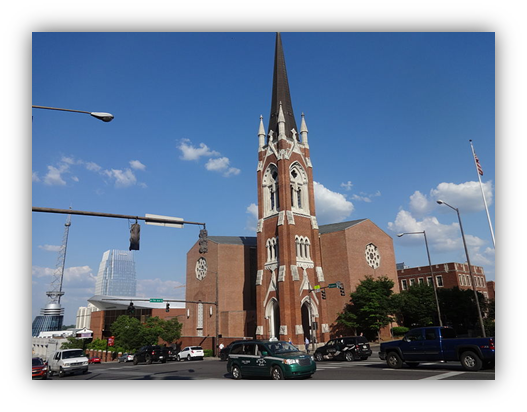
About 100 musicians participated this year. They always introduce the youngest and oldest musicians. This year, the youngest was 11 and the oldest was 89. The place was packed.
It was, of course, really enjoyable, just like every year. The church is beautiful and its acoustics are terrific. The players were excellent and sounded like they had played together before. Some of them had, a year ago.
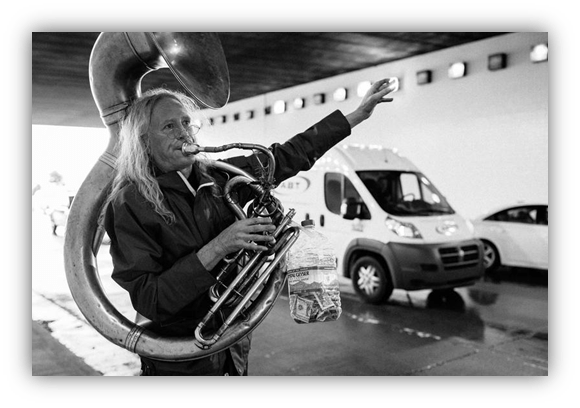
Joe Hunter was among the sousaphone players.
He’s known as The Tuba Man and can be found almost every evening rush hour busking in the rail yard underpass on Thompson Lane. Traffic comes to a standstill there and his horn reverberates well in the tunnel. He’s a nice guy and a good player (even with the exhaust fumes.)
So when you’re stuck in traffic, enjoy his music, and hand him a few bucks.
2025 was a little different for me, though.
After TubaChristmas, and before we started driving to my dad’s house in Maine for the holiday, I checked the list of events on tubachristmas.com looking for a TubaChristmas more or less along the way and in our time frame. I found exactly one.
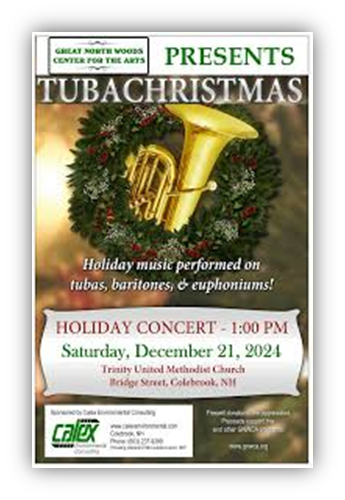
It was in Colebrook, NH, a town of about 2,000 people eight miles from the Canadian border.
It wasn’t exactly on our way, but if I flew to Ireland to see Peat And Diesel, then northern New Hampshire isn’t much of a detour. I couldn’t guess how many tubists there are in the northern New England woods.
But there was only one way to find out.
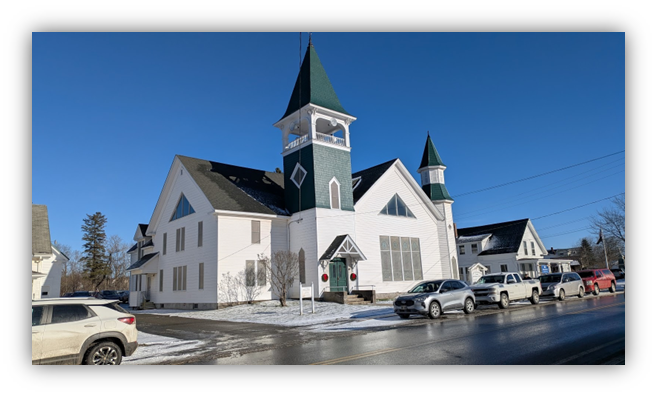
We arrived at the Trinity United Baptist Church early but the pews were already filling up.
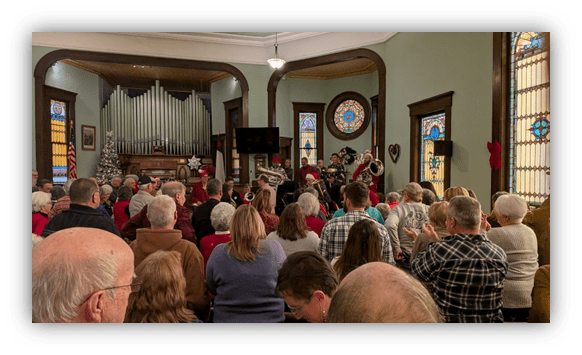
And though there were fewer seats than in Nashville, both venues were full.
And rather than a hundred horns, I counted sixteen but the room was a sixteenth the size so it sounded just as full.
After a few songs, I went to the back of the hall to film a video, and it turned out to be the same song that I have videoed in Nashville. I hope you like “Hark, The Herald Angels Sing.” I do.
As you’ll hear, I may have been wrong about Americans not singing.
Maybe it’s the difference between a city and a small town, or maybe it’s that Music City is too hip to join in, but everyone in Colebrook sang enthusiastically.
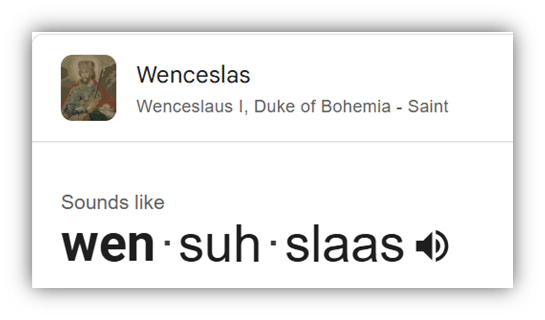
So what if some of us can’t pronounce “Wenceslas?” We had a great time.
The conductor mentioned how far some people had come for the event. Some came from as far away as Nashua. She, of course, didn’t know there were a couple Nashvillians in the audience, but she did point out people from Sherbrook, Quebec.
That’s only about 50 miles, but given the strained relations between our countries right now, all the locals applauded in appreciation. The tubas also played both national anthems.
The concerts in both Nashville and Colebrook lasted about an hour and drew from the same book of songs that have been arranged for tubas.
The TubaChristmas organization sells the sheet music, though in Colebrook a song had been arranged by one of the players. He did a good job and I hope it makes its way into the catalog for other TubaChristmas’ to play.
At the end, there was a standing ovation.
As we left Colebrook and drove through Dixville Notch towards Maine, I thought about two things.
- First, the road is steep and icy and I need to be careful.
- And second, I can’t wait to attend at least one TubaChristmas next year.
Put a note on your calendar.
On Thanksgiving, go to tubachristmas.com and find a concert near you. Or if you’re like me, find several along your holiday road trip. Whether you go to one in a big city or a small town, you’ll be in the Christmas spirit on your way out the door.