
First off, let me drop a graph right here:
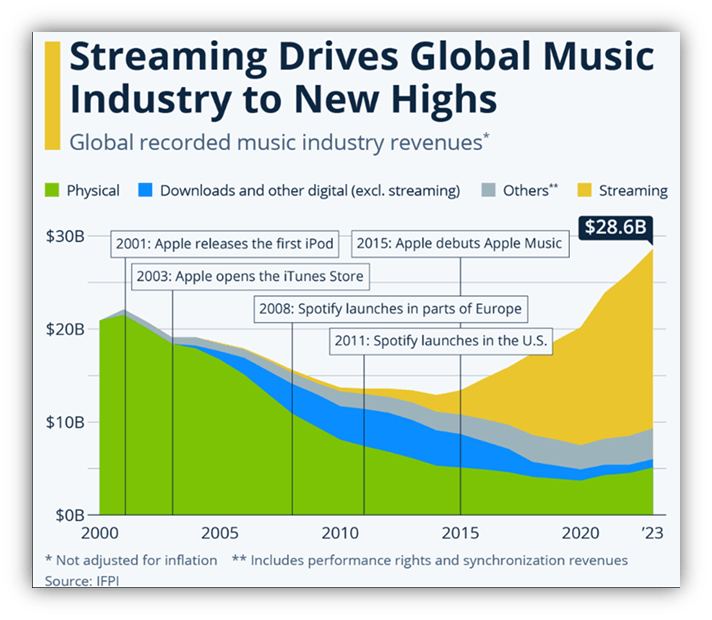
That graph, the good people of the Internet will tell you, offers irrefutable proof, that Spotify – streaming in general, but Spotify in particular – has destroyed the music industry! That Spotify is the worst thing to have ever happened to music!!
It’s obvious, right? It’s impossible to look at that graph and not conclude that all is doomed. That, if things keep on going the way they are:

It will not be long before Taylor Swift is reduced to busking on street corners for spare change.
Naturally I’m being sarcastic. That graph shows quite the opposite.
I know it’s hard to accept. I know it goes against all your socialist principles. But Spotify saved music.
If not for Spotify – assuming that 00s trends persisted into our present reality – music would now no longer exist, and Taylor Swift would have been reduced to busking on street corners for spare change.
I love you Bjork, but when you say that Spotify is the worst thing to ever happen to music … you must be bonkers. Do you not remember how bad it was before Spotify? How horrible it was to have to rely on the radio to discover music? Maybe you don’t because you were a rich rock star:
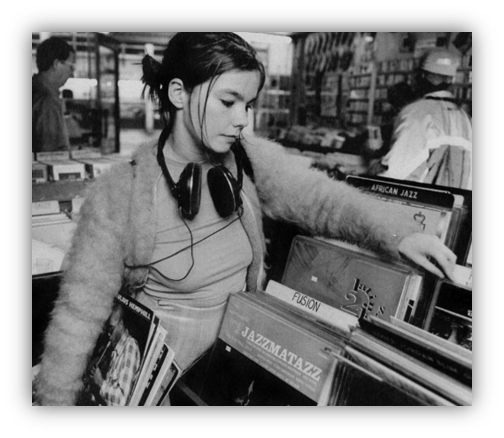
But not everyone could afford to go buy an armload of jazz records on a whim, on the off chance that they might like them.
Streaming – in general, but Spotify mostly – has not just saved the music industry but pushed it to previously unprecedented heights.
So, y’know, give it a break! Spotify has managed to achieve something that the combined efforts of everyone who has ever criticized it has not come even close to accomplishing.
In order to not be making music worse Spotify doesn’t have to solve all the problems that the music industry itself has failed to solve over the course of countless decades. It doesn’t have to create a musical utopia. All Spotify needs to do in order to not be making music worse – to not be the worst thing that has ever happened to music – is to simply not be worse than what came before it.
And what came before it sucked! What came before it was primarily the radio, the ultimate in free music.
That, and blank cassettes, full of songs patiently taped off the radio.
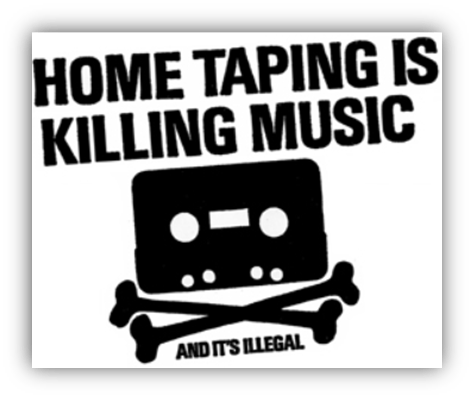
Which was simultaneously both a pain in the arse for the consumer and allegedly death for the music industry.
The music industry has been mongering its doom for decades! It’s mongering its doom now even though… well, just look at the graph. And yet the Internet still talks as though it’s 2014, that the last decade never happened (understandable, considering…), that the industry is still in freefall, and that it is Spotify who is to blame. I guess it’s totally understandable that the Internet does so. After all, there’s a lot of clicks in anti-Spotify vitriol.
So much of the Internet has so much invested in perpetuating the myth that Spotify has destroyed music.
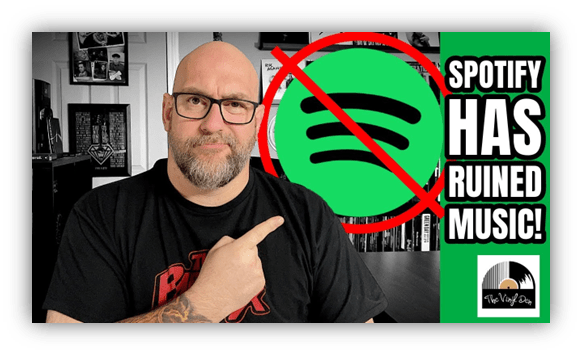
So much of the Internet has embraced the fundamental truth that the only growth industry stronger than music in the streaming era is the anti-Spotify clickbait industry.
Spotify has not only saved music, it has provided a lifeline to music journalism. Not enough to save music journalism, but Spotify can’t be expected to solve all the problems.
An entire booming cottage industry has emerged dedicated to producing a constant stream of whingey articles, each one determined to make you feel guilty for enjoying yourself, each one competing for who can come up with the most inconsequential nitpicking complaint, safe in the knowledge that they will be able to find somebody who will publish it.
That somebody is usually The Guardian. Let’s look at a few:
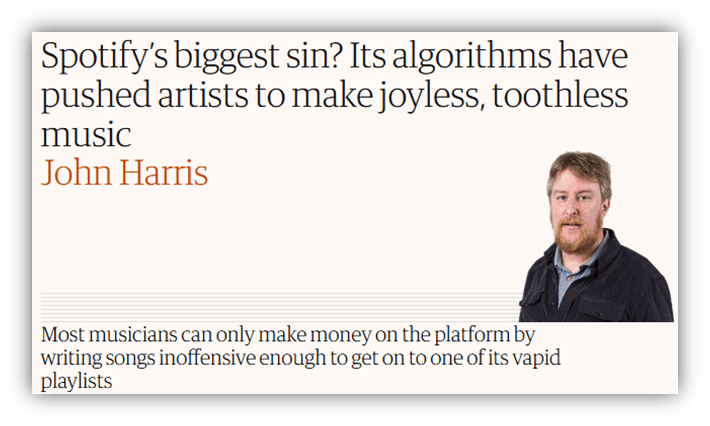
I could spend this entire article picking holes in every sentence of this Guardian piece- there is barely a statement that ought not be contested – but let’s start by saying that was a bizarre headline to read in March 2025, at the end of 12 months that had seen the rise and chart dominance of Sabrina, Chappell and “brat” (Sabrina’s music may be toothless, but it sure as hell ain’t joyless).
If only John had written this a few months later, when we had to deal with Alex Warren, it may have felt as though he had a point. But even then, no, he still wouldn’t have. For whilst “Ordinary” is generating mind-boggling streaming figures, it is far bigger on radio, the true pushers of joyless, toothless music, as they have always been.
The crux of John’s argument that Spotify is forcing “joyless, toothless music” onto the masses, is that it encourages “passive listening.”
John didn’t invent the term.
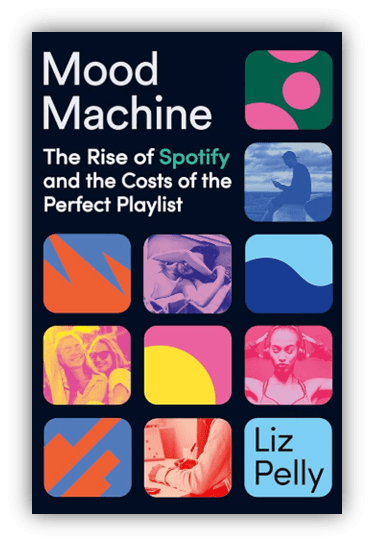
The concept of “passive listening” was, if not invented, then certainly popularized, by Liz Pelly, author of Mood Machine: The Bible of Spotify-haters.
A position it holds largely due to such prose as “grist for the algorithmic re-imagination of culture write large” ,“the hyper-centralized corporate streaming economy,” and a talent for nailing that tone of voice in which any activity, no matter how benign, can be made to sound suspect.
The concept of “passive listening” centres around the idea that we no longer know how to listen to and appreciate music.
- We simply put it on in the background and go about our day.
- We no longer actively choose the music we listen to.
- We don’t actively listen to it.
It’s just there.
“The relegation of music to something passable, just filling the air”, as Liz puts it.
Apparently, this is a practice that never happened before Spotify. Turning the radio on for company, according to this telling of events, was never a thing that people did.
A few sentences after complaining about “passive listening” John writes this:
“The fact that no money is paid out if a song is listened to for less than 30 seconds has come close to killing the idea of a slow-burning intro.”
Why? Because kids these days have such short attention spans that if you don’t grab them straight away then they will skip to the next song. In John’s imagination Spotify users are both passive non-listeners not paying any attention whilst simultaneously paying so much attention that they will press skip before the first 30 seconds if they get bored. Passively not-paying attention, whilst their finger hovers forever over the skip button.
John doesn’t quote any data to support his slow-burning-intro-killing claims (one of the beautiful things about anti-Spotify articles is that you can write anything, nobody ever asks you to provide evidence to back it up.)
But he does give an example:
“‘Sound & Vision” by David Bowie, a song that he argues would not succeed in a streaming economy, despite the fact that it has been streamed 100 million times.
Liz takes it further, claiming that pop hits now need to kick off with the chorus; songs kicking off with the chorus being the extremely subjective gold standard that proves that Spotify has decimated our attention spans.
Liz nominates one such supposed “don’t bore us, take it to the chorus” song. Unfortunately for Liz, that song is “Rockstar” by Post Malone & 21 Savage, a song that disproves her own argument.
Now yes, the lyrics to “Rockstar” do open with the chorus, but first you have to sit through 15-seconds of moody electro and murky trap-vibes. Also, “Rockstar”s melody -such as it is – is effectively the same for both the verses and the chorus, thereby rendering “Rockstar”s chorus-opening status effectively meaningless. “Rockstar” is hardly the work of someone trying to grab your attention in the first few seconds to prevent you pressing skip.
Liz also mentions “Location” by Khalid, an – if possible – even less attention-grabbing song. I’m actually struggling to find a recent big hit that does start with the chorus.
- Does “Golden”? No, it doesn’t get to the chorus until about a minute in following two verses and a pre-chorus.
- Does “Man I Need”? No.
- Does “Ordinary”? I fell asleep before it got to the chorus, so I think the answer is no…
Most hits appear to get to the chorus somewhere around 40 second mark, ie after John’s 30 second cut-off point… where the hell is a song that does start with the chorus?… oh, here’s one.
One song does not make a trend.
The success of “Rockstar” – Billboard Hot 100 Number One for Eight Weeks and all that – could be better used as evidence of the “joyless toothless”/”passive listening” theory. And indeed, it has been used as such.
But here’s the thing… IT CAN’T BE BOTH!!! You can’t use the one same song as proof that kids these days are insatiable demanders of instant hooks, whilst simultaneously being equally insatiable demanders of “emotional wallpaper”, “just filling the air”!!!
I realize that my focusing on such an irrelevant little quibble seems like an irrelevant little quibble.
But that’s what so much of the Spotify-bashing industrial complex consists of. In order for the Spotify-hating industrial complex to continue to grow journalists are forced into a desperate search for new angles; new Spotify-crimes to uncover. The Spotify-bashing content machine is so hungry that it’ll gobble up any old scraps.
I thought that the 2022 article “Fans quitting Spotify to save their love of music” focusing on Meg:
A bakery store worker who deleted Spotify because she couldn’t decide on which playlist to play,
Thereby presumedly forcing her customers into buying bread and pastries in awkward silence, may have been the most desperate attempt to find something – ANYTHING! – to feed the machine – not to mention the smallest story ever to get covered by a global media organisation
– but no, the stories have become even slighter.
Nonetheless, it’s a classic of its form, and naturally the journalist was Liz Pelly. And naturally it was published by The Guardian.
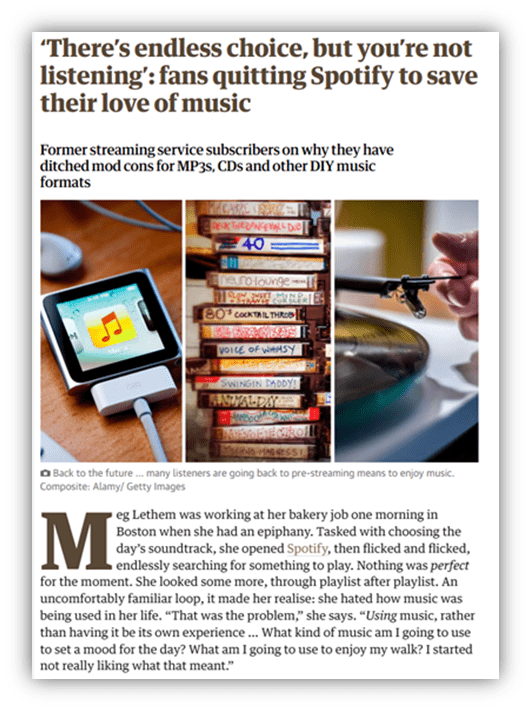
“Using music, rather than having it be its own experience … What kind of music am I going to use to set a mood for the day? What am I going to use to enjoy my walk? I started not really liking what that meant.”
What does that mean?
“I decided that having music be this tool to create an experience instead of an experience itself was not something I was into.”
Who talks like this? Who even thinks like this?
Who listens to music and then finds themselves plagued by questions about whether or not they are listening to it the right way?

Whether they are creating an experience instead of it being an experience itself? There are a million more terrible things happening in the world and you are asking me to be fixated on this? And yet these are the scraps of discontent that fuel the Spotify-hating machine.
If such slight stories were not enough, the Spotify-hating industrial complex also requires sub-editors to desperately reach for progressively more sensationalist headlines…
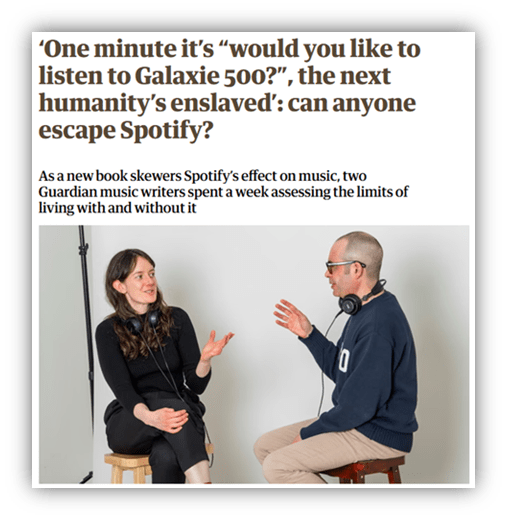
(I’m starting to think some of these headlines are just taking the piss.)
In this article, Alexis Petridis complains that Spotify is “forcing everybody into competition with Ed Sheeran and Sabrina Carpenter”, apparently confusing Spotify and its virtually infinite variety of playlists covering every imaginable genre – some of them clearly made-up – for BBC Radio One.
The pop stars on popular playlists like Pop’N’Fresh, Get Popped, Today’s Pop Hits and hot girl sh*t playlists, are in competition with Ed and Sabrina.
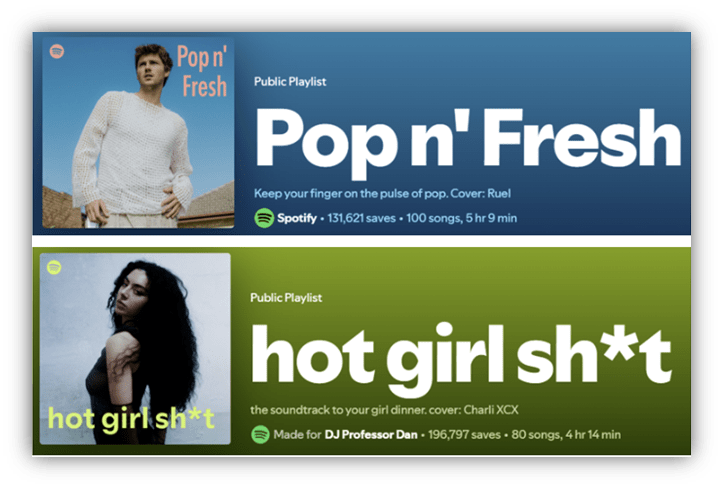
The ambient indie rock noise makers on Oblique, Noisy and Terra Incognita playlists are most certainly not.
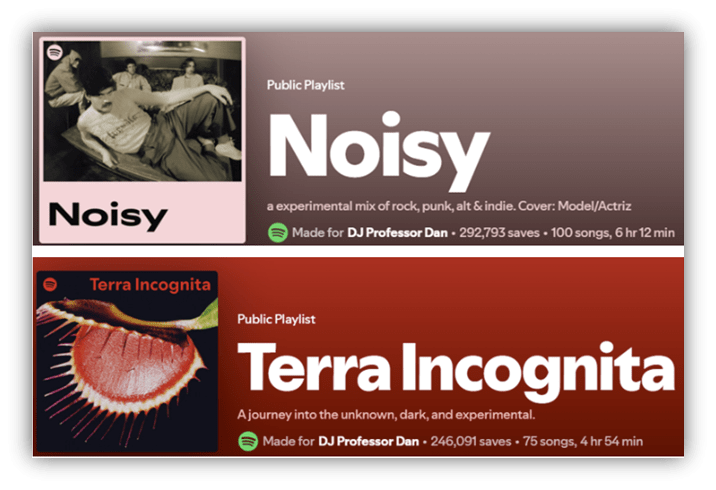
I’ve read so many of these articles. I’ve slogged my way through “Mood Machine.” And believe me, it was a slog. And 90% of what they say is so completely alien to my experience that I can’t believe we are talking about the same thing.
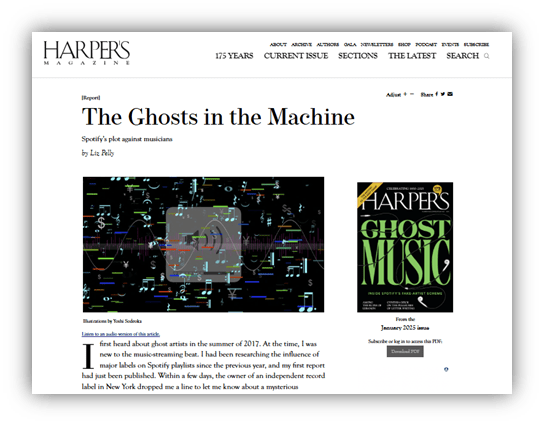
Sure, they exist… off in some dark corner of the app, where they serve a function for those occasions when you need some background music that can easily be ignored. Most musicians don’t like to intentionally make music just for it to be ignored, not even ambient musicians… so what does Spotify do to satisfy that need?
They commission musicians to make music specifically designed for that purpose. And then shock! horror! those musicians give themselves pseudonyms! In short, they are actual, real-life – and not, as some would have you believe, fake – people, commissioned to compose and record music, for which they are then paid for, using stage names.
Okay, sure, yes, it is a bit weird that White Noise Baby Sleep’s search-engine optimization masterpiece “Clean White Noise – loopable with no fade:”
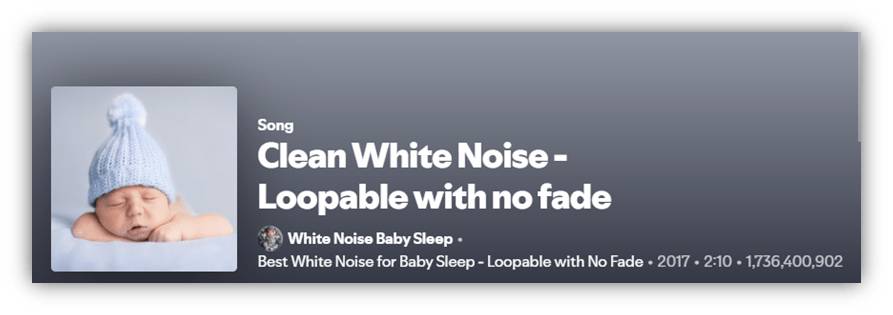
Has 1.7 billion streams.
But what about this warrants such an evocative term as “ghost artists”? The people behind White Noise Baby Sleep are presumedly raking it in, but there are worse contributions to the world than helping babies sleep.
“AI Slop”?
That’s not even Spotify’s doing! It’s their… um… not doing. It’s people making AI Slop, uploading it to Spotify, and Spotify not having the protocols to intentionally identify it as AI Slop and taking it down.
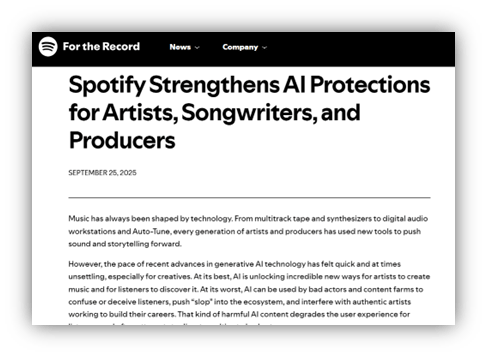
Apparently they are working on such protocols.
Apparently last year they took down 75 million “spammy tracks.” I’m intrigued what this means exactly – particularly since the total number of tracks on Spotify is stated as “over 100 million” – but they’re not saying any more. It doesn’t seem to mean “Clean White Noise – loopable with no fade” by White Noise Baby Sleep, because that’s still there.
From reading the collected works of Liz Pelly et al you might get the impression that Spotify was nothing but chilled-out AI slop made by ghosts.
But it’s not.
It’s every song ever recorded (almost). You can go your whole life listening to Spotify and never find yourself in the middle of a “jazz to drink coffee to” playlist. Because you don’t have to. You have freewill.
You can listen to something else. You can listen to everything else (almost).
Virtually all of the complaints that artists make of Spotify have their equivalents in the pre-Spotify past. “Mood Machine” has this whole section on the birth of elevator music in the 1940s to provide context for the “ghost artists” chapter. And Liz admits that “the roots of commercialism inflecting creativity predate even the era of recorded music.”
Nevertheless, “Mood Machine” is full of such time-honoured gripes as artists complaining that an uncharacteristic ballad has become their big hit, as if metal bands hadn’t been complaining about that since the invention of the power ballad. Or that they feel they need to tweak their sound in order to cater to popular playlists, as if genres and radio formats hadn’t previously existed.
As if the entire history of pop wasn’t nothing but a narrative in which a new sound appears, and everyone suddenly feels as though they have to jump on the bandwagon.
“Mood Machine” has a whole chapter featuring artists complaining that they are being classified as part of a genre they don’t personally identify with… pop stars have been complaining about that FOREVER!!!! “I don’t know why critics describe us as punk/trip-hop/grunge/disco… it’s just rock’n’roll man” is such an eyeroll inducing rock star cliché that variations of it were said by the original rock’n’rollers: “I don’t know why critics describe us as rock’n’roll… I’m just playin’ the blues man.”
None of this is new! All of this just business as usual!! None of this is evidence that things are getting worse!!!
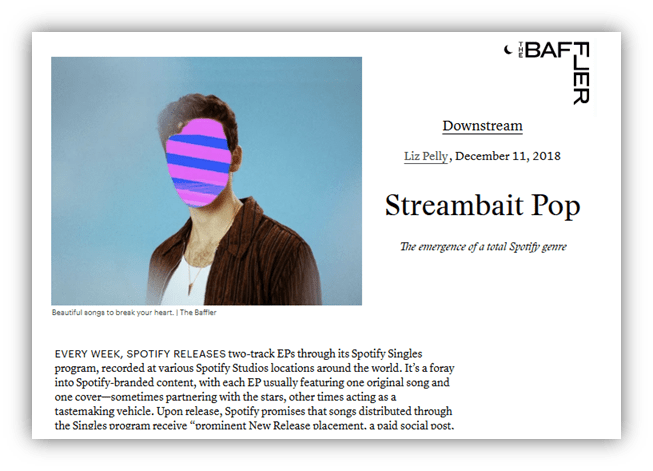
When the anti-Spotify opinion-piece writing industrial complex talks about “vapid playlists” and genres, there’s one specific kind of playlist and one specific genre they are generally talking about. It’s a genre they made up themselves: Spotify-core aka “The Spotify Sound” aka Streambait Pop:
A sound apparently invented by Billie Eilish and her “sad piano ballads with weird drums” in the late 10s:
And now including such critical faves as Clairo, Big Thief, Mitski, and the entire Phoebe Bridgers universe…
You thought those artists were the most important operating in pop today? No! According to the Spotify-haters Mitski is not the sad-girl poet laureate. She’s “emotional wallpaper”. Just “filling the air”.
The most popular Spotify-core playlist is probably “Chill Hits” with 9 million saves, or just over 1% of Spotify users.

And there are a lot of playlists with a similar vibe…
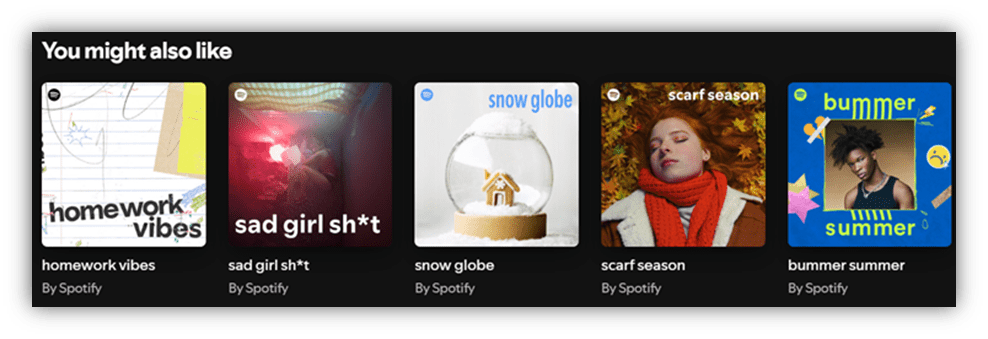
“Chill Hits” is a hugely popular playlist, featuring a solid if not-surprising selection of the last few years of soft pop, but here’s a question:
Why is the “Chill Hits” playlist, with 9 million saves considered “Spotifycore” but “RapCaviar” with 16 million saves not?

Why isn’t “Beast Mode” with 10 million?
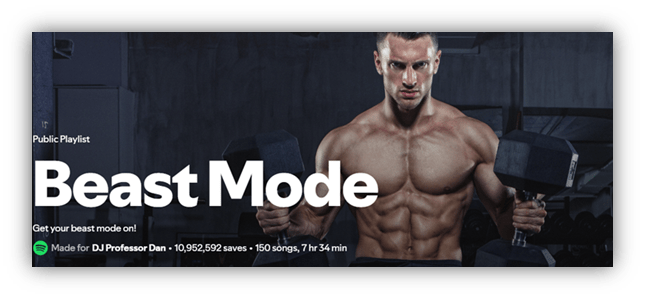
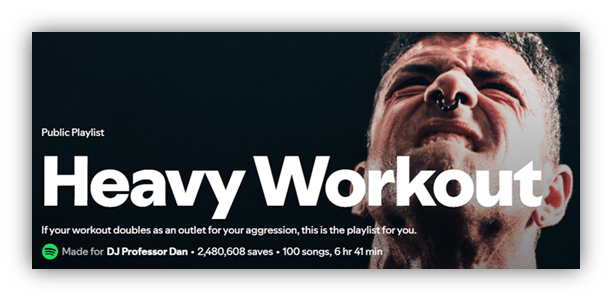
Or “Heavy Workout” – like “Beast Mode” but for metal – with two and a half million?
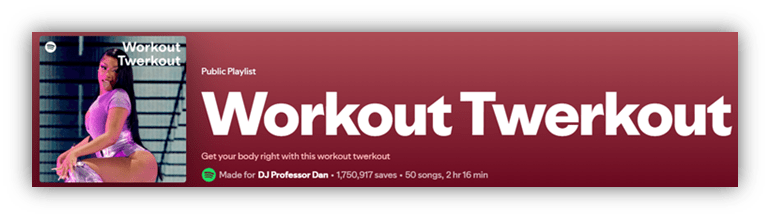
Or “Workout Twerkout”, with more than one-and-a-half million?
Sometimes it feels as though the definition of Spotify-core is the music that white music critics – of their own free will – listen to on Spotify.
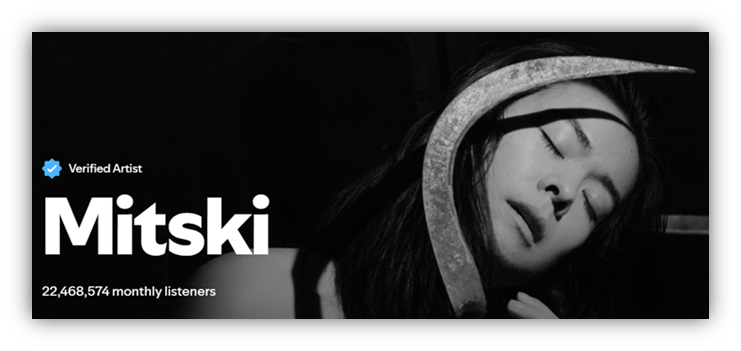
Why is Mitski – with 22 million monthly listeners – considered Spotify-core…?
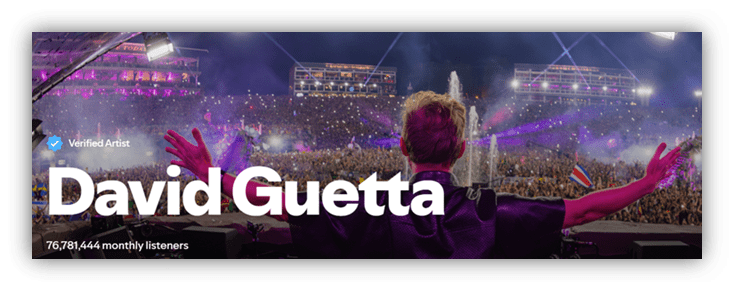
…but not David Guetta, with 77 million monthly listeners?
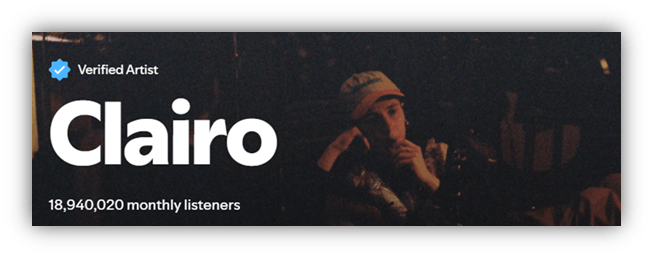
Why is the 19 million monthly listener Clairo?
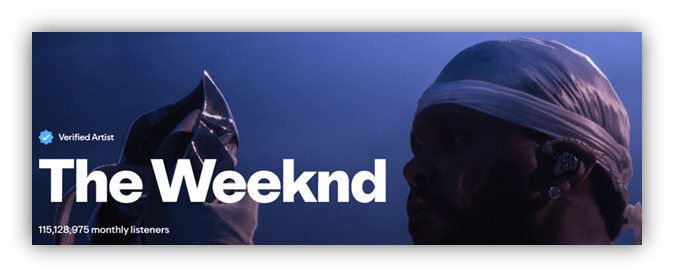
But not the 115 million monthly listener The Weeknd?
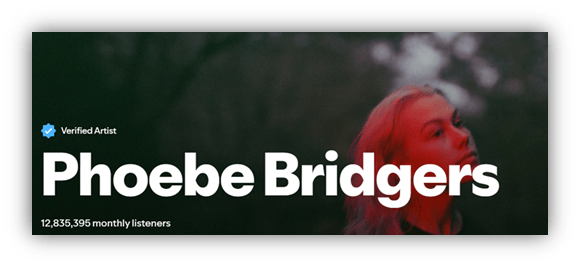
Why Phoebe Bridgers, who has 13 million monthly listeners…
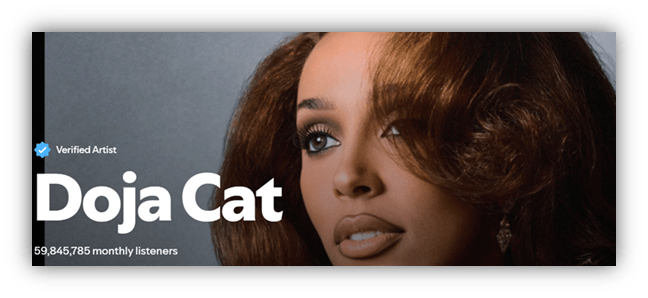
And not Doja Cat, who has 60 million monthly listeners?
Spotify-core makes up only a small proportion of the overall Spotify-verse. More than “ghost artists” and “AI Slop”, but not as much as the soundtrack to “K-Pop Demon Hunters.” Just because you are listening to music on Spotify does not mean you need to listen to Spotify-core. A lot of Spotify-users don’t.
Spotify is just a tool. An agnostic tool. You can use it for many things.
You can use it for background music. Or you can sit down, listen carefully to every note, and let the music wash all over you. It’s up to you. You have the power!!!
Here is a short list of ways you can listen to music on Spotify – or pretty much any other streaming platform – of varying levels of passivity and algorithm-reliance:
- “Artist Radio” (pick an artist you like, it’ll play you similar artists),
- “Song Radio” (pretty much the same),
- You can do a deep dive into an artist,
- Once you are bored with that artist you can see what “fans also like” and do a deep dive into them.
- You can listen to a playlist – either one made by the Spotify-algorithm, one made by an actual human Spotify employee, or one just made by some random regular person – and if you like a song on that playlist, you can do a deep dive into that artist and/or scene.
- You can listen to a whole album if you like (one of the most popular claims about Spotify is that it has killed the album, that nobody listens to albums anymore, that album releases are no longer an “event”… this claim is usually made by the same people who then complain that Taylor Swift has taken over the charts every time one of her albums drop).
- You can listen to the same album over and over again if you want.
- Or you can be supremely lazy and just click on “Daily Mix”, a selection based on the stuff you like, and then complain that it’s playing the stuff you like.
Streaming has offered the simplest way to explore the entire history of recorded music (almost), to discover and make sense of it all… stop constantly complaining and use it!!! Take some initiative!!! Go explore!!!
But back to the article by “toothless”, “joyless” John… amongst all the other Spotif-crimes he touches upon, John also refers to “the limited public outcry about the tiny rewards Spotify offers most musicians”…
“Limited public outcry”?!?!
IS HE SERIOUS?
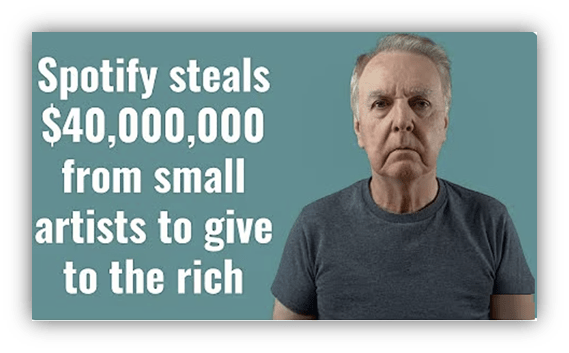
“The tiny rewards Spotify offers most musicians” is the one thing that everyone knows about Spotify!
The one thing that everybody ever talks about when talking about Spotify! You’ve probably been reading this and wondering if I was ever going to bring it up!! You may have been shaking your fists at the screen, frustrated that I haven’t brought it up yet!!!
Well, I’m going to torture you a little longer.
I am going to postpone my argument that, even on those occasions when the anti-Spotify industrial complex sounds as though it is making a valid point, it is not, in fact, making a valid point. That it is, in fact, engaging in an act of self-sabotage, campaigning against the very conditions that led to music industry revenues reaching the record highs illustrated at the start of this rant.
That the one fact that everyone thinks they know about Spotify is, in fact, not a fact.
To be continued…































Okay…doesn’t Spotify openly support ICE? You know, that organization that shows visible racism against Latinos?
I was planning on leaving their allowing ICE advertisements – not “openly supporting ICE” just allowing advertisements – to the second instalment, but since you bring it up…
ICE has also bought advertising on Google and YouTube, but no-one seems to care about that.
ICE have also bought advertising on Facebook and Instagram… but no-one seems to care about that.
ICE have also bought advertising on LinkedIn… but no-one seems to care about that.
So little do people care about ICE ads when they are on any platform other than Spotify, that they are using these platforms – who, I repeat, allow ICE advertisements themselves – to campaign for a Spotify boycott because Spotify allows ICE advertisements.
Whatever the motives are for these boycotts, it’s not to stop ICE (although, to be clear, ICE does need to be stopped)
The only thing worse than engaging in political discourse within our fun little daily conclave would be to ignore it.
I had a Spotify subscription for a little bit of time. When they decided to hitch their wagon to the Joe Rogan manosphere, I noped out. Along the same line of thinking, that’s why I will never be on the X platform.
Now, I’m sure many of you are thinking, “yeah, but you regularly publish content from authors whose work refers to and links to Spotify. Isn’t that being disingenuous regarding your position?”
Probably. Here’s my rationalization: all the platforms that DJPD referenced in his comment have transcended from being a luxury and frivolous way to pass the time, to being “necessary” to properly communicate and engage with other people. At least, to some degree.
It would be as if we all decided to stop using Internet search engines on a moral ground; which, believe me, I’d love to be able to do, but it’s just not practical.
Lots more to say, but I’ll let others chime in.
A spirited defence. I’m inclined to agree with all the points you make – I’ll hold off on how Spotify renumerates the artists and other thorny issues til the follow up.
One of my pet hates is the argument that music was better in the past. The anti Spotify complex seems an extension of that. There’s an idea that finding new music meant more in the 20th century because it wasn’t as easy as opening an app and having access to seemingly unlimited options. I’m pretty sure my 14 year old is getting just as much fulfilment from using it as I did in the analogue age.
If you don’t like it you don’t have to use it, you can still do it the old way if you wish wihout the musical snobbery of telling the rest of us how much better it makes you.
Passive listening has always been around, its called the radio. You have no choice in what being’s played and its often used as background music. How much you choose to interact or be passive is entirely your choice.
Streaming does seem to have made the charts more boring as songs now hang around. And at Christmas time its even worse as the same songs now clog up the chart year after year. Which is a more accurate reflection of what people are actually listening to but is a less exciting chart.
I noted elsewhere at the weekend that there is an ongoing Americanisation of the UK Xmas chart. There are currently 6 Christmas songs in the top 10 – 4 of them by US acts. Overall there are 53 Xmas songs in the top 100 and 30 are by US acts. Compare to 2015 when there were 14 Xmas songs in total in the top 100 and only 3 were American.
A possible reason for this is streaming service playlists compiled to suit the (English speaking) world as a whole. As the US is the biggest market their songs dominate so listeners opting for a curated playlist are served up songs that wouldn’t previously have been mass consumed here.
Overall though, I can cope with the annual generic lump of Xmas fare – especially as I don’t listen to it – for the other benefits.
The chart stagnation is a problem, but it’s not really Spotify’s fault. Billboard and ARIA and the Official Charts Company could easily come up with a formula to get the charts moving again like the old days. They could weight the results.
Here is how:
For any song going up the charts, double the increase in streams from the week with the previous highest number of streams. So if a song rose from 5 million streams to 6 million streams, double that increase to get 7 million streams.
For any song going down the charts, double the decrease from its peak. So if a song peaked at 6 million and is now 5 million, double that decrease to get 4 million.
But yes, it’s a far more accurate reflection of what people are actually listening to. What proportion of the population used to buy records in any average week? Probably less than 1%? And yet we were totally fine with letting that 1% of the population dictate what the Number One song was. Now the proportion of the UK population that streams is about 50%, and in the US is even higher… it’s far more democratic.
The charts issue is more a side effect of streaming that I’m not sure the majority are that bothered about. There’s plenty of acts that have large followings without troubling the charts much. I saw it at Leeds Festival this summer when Wallows played. A solitary UK singles chart entry at #65 and that was in 2019. 20 years ago that sort of profile would see them on a small stage way down the bill yet here they were on the main stage with a huge crowd.
And the point about the 1% determining the chart by what they buy is totally valid. Its just nostalgia and that’s how it always was skews perception. Songs could be huge hits but with little afterlife once they left the charts. Whereas now they are a much truer reflection of what is being listened to right now; new and old alike. Just a different way of doing things.
I have similar sentiments.
If streaming services died I would absolutely hate it. I LOVE streaming services. Don’t get me wrong…I love physical record albums. If I’m in a store with physical music for sale, I always gravitate over to it and look at it even though I know that I’ll almost never buy it any more. I have a nifty record player and sound system, but I haven’t played a record in a few years. The sound is better on my sound system, but audiophilia has never been a priority for me. I want more music, not perfect sounding music.
I may listen differently than some do. I tend to play my own music more rather than letting the service choose the music for me via pre-fabbed playlists. Sometimes I’ll listen to playlists that are built just for me, but not much. Those are good for discovering new music, though.
As I’ve mentioned before, I like Apple Music more than Spotify, because I can upload my own weird music/sound files (commercials, jingles, etc) and stream them anywhere. The only bad thing is that Spotify is more popular, so sometimes I feel a little FOMO (especially during the end of the year wrapped features.) But the services are practically the same.